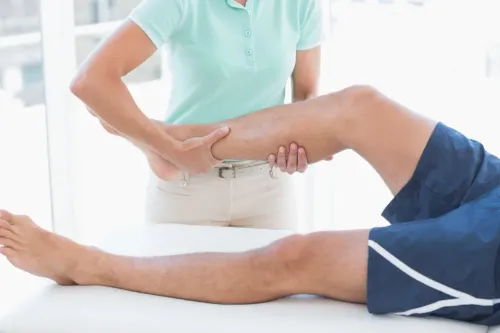
Physiotherapy and home exercises serve different purposes: one provides assessment, correction, progression and hands-on training, while the other extends practice between sessions. By comparing their benefits, limitations and safety requirements, you can choose a rehabilitation plan that matches the cause and pattern of paralysis rather than relying on a generic routine.
Key takeaways
- Identify the paralysis cause and rule out emergencies before exercising.
- Choose supervised physiotherapy for assessment, progression, and safer movement practice.
- Use home exercises between sessions exactly as prescribed, without forcing weak limbs.
- Combine clinic treatment and home practice when your plan needs regular repetition.
Start With the Cause and Rule Out an Emergency
Before choosing physiotherapy or home exercises, identify the cause and confirm that the person is medically stable. Paralysis describes impaired movement, not one diagnosis, so recovery and rehabilitation differ by condition.
| Cause | Typical pattern | Why the plan changes |
|---|---|---|
| Stroke | Sudden weakness, often on one side; speech, vision or balance problems | Urgent treatment and graded mobility after stabilization |
| Spinal-cord injury | Weakness below the injury, altered sensation, bladder or bowel effects | Level of injury, pressure care, breathing and autonomic risks guide treatment |
| Traumatic brain injury | Movement, coordination, balance, cognition or behaviour changes | Attention, memory and safety awareness affect exercise |
| Multiple sclerosis | Variable weakness, fatigue, sensation and balance problems | Symptoms fluctuate and heat or overexertion can worsen function |
| Peripheral-nerve injury | Weakness and altered sensation in a specific nerve distribution | Nerve recovery, denervation and splinting needs determine loading |
| Bell’s palsy | Facial weakness from facial-nerve dysfunction | Facial care and medical assessment differ from limb rehabilitation |
Sudden or worsening one-sided weakness, facial drooping, speech difficulty, severe headache, loss of balance, chest pain or breathing trouble requires urgent medical assessment, not exercise. A new stroke is time-sensitive.
Recent stroke or spinal injury requires medical clearance and individualized timing. Pushing high-dose mobilisation too early after stroke can reduce favourable recovery, so more exercise is not automatically better. Paralysis rehabilitation options can include physiotherapy, occupational therapy, speech therapy, medical treatment, equipment and caregiver training; exercise alone cannot reverse neurological damage.
What a Physiotherapist Adds Beyond an Exercise Sheet
Supervised physiotherapy is stronger than an exercise sheet for assessment, safety and progression. A physiotherapist can identify unsafe transfers, fall risk, poor technique, shoulder subluxation, contracture risk, spasticity, orthotic needs and cardiopulmonary limits before practice causes harm.
A neurological assessment checks:
- Muscle strength, joint range, sensation, tone, spasticity, coordination and pain
- Balance, walking, transfers, fatigue and cardiopulmonary tolerance
- Shoulder subluxation, contracture risk, pressure-injury risk and skin protection needs
- Activities of daily living, wheelchair use, positioning and the assistance required from caregivers
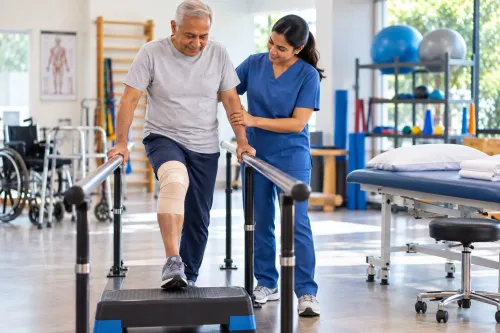
The physiotherapist uses these findings to choose task-specific practice, such as sit-to-stand, transfers, reaching, stepping and walking. They correct alignment and timing, provide assisted movement, teach positioning and contracture prevention, assess a splint or orthosis, and adjust the dose: progress it when movement is safe, or reduce it when fatigue, pain or poor control appears.
Gait training, transfer training and caregiver instruction require observation and feedback that a generic sheet cannot reproduce.
Home practice is stronger for frequent repetition when it is properly prescribed, demonstrated and monitored. It cannot replace clinical reassessment. Stroke rehabilitation may also require occupational therapy, speech and language therapy, nursing, medical care and psychological support.
Physiotherapy for paralysis works best as part of that coordinated plan, not as a promise that exercise alone reverses neurological damage.
How to Use Home Exercises Safely Between Sessions
Home exercises for paralysis are useful when a physiotherapist prescribes the dose and setup. The programme must state the position, required assistance, repetitions, rest periods and stopping rules—not simply say to exercise more.
| Exercise | Adaptation |
|---|---|
| Supported active-assisted arm or leg movement in lying | Guide a one-sided weak limb without pulling the arm; support a subluxed shoulder and never force a stiff joint. |
| Ankle pumps | Use gentle movement for foot drop; do not treat passive movement as strength training. |
| Seated weight shifts | Keep the wheelchair locked, support poor trunk control and use a trained helper. |
| Repeated sit-to-stand from a firm chair | Use prescribed armrests or aid, guarding and fewer repetitions when balance or fatigue is poor. |
| Reaching or stepping | Practise only with the prescribed support, appropriate aid and trained helper; do not walk alone at fall risk. |
Spasticity requires slow, comfortable movement rather than force. Wheelchair users need positioning, pressure relief and transfer practice; hold your breath during effort.
Passive range of motion can maintain joint movement and reduce stiffness, but it cannot restore voluntary activation or strengthen a completely denervated muscle. Stop and contact the treating team for pain, marked fatigue, increased spasticity, dizziness or reduced function. Do not increase repetitions after fatigue or declining function appears later in the day.
When the Best Answer Is a Planned Combination
Combine both when you need safe correction and frequent practice. Clinic or home-visit sessions establish transfers, walking, positioning and equipment use; prescribed home exercises increase repetition between visits. The question “home exercises which is better” has no universal answer: the best plan matches your diagnosis, safety, fatigue and support.
Judge progress with measures that affect daily life, not strength grade alone:
- Less assistance for bed mobility and transfers
- Faster or farther walking, with fewer falls
- Better balance, wheelchair skills and pressure-relief technique
- More use of the affected arm in dressing, eating or reaching
- Lower pain, fatigue and spasticity
- Less caregiver lifting, supervision and time burden
Depression, communication or cognitive problems, fear of falling, fatigue, limited caregiver support and an inaccessible home can reduce useful practice. Add caregiver training, equipment, remote monitoring, group therapy or home visits when they make the programme realistic.
Spinal-cord-injury rehabilitation must also address pressure-injury prevention, respiratory care, autonomic dysreflexia, bladder and bowel complications, transfers and wheelchair skills. Neuropathic pain may need medical treatment beyond exercise. Constraint-induced movement therapy suits selected stroke survivors with active wrist and finger extension plus adequate cognition, balance and endurance; it is unsafe or frustrating for everyone else.
Review the measures regularly and change the dose when function stalls, fatigue rises or safety declines.
Questions to Ask Before Choosing a Local Provider
Before booking, ask for a neurological assessment rather than choosing by distance or equipment. A suitable provider should identify the cause and level of paralysis, record baseline strength and function, and explain how safety will be managed.
- How will you screen for falls, shoulder injury or subluxation, spasticity, contracture and pressure injury?
- What measurable goals will we track, such as transfer assistance, walking distance, balance, arm use or caregiver burden?
- Will you demonstrate a written home programme with positions, assistance, repetitions, rest periods and stopping rules?
- How will you train the caregiver and review progress?
- How will you communicate with the neurologist, rehabilitation physician or other therapists if swallowing, cognition, speech, breathing, bladder or bowel problems appear?
| Factor | Stronger evidence of suitability | Warning sign |
|---|---|---|
| Neurological assessment | Cause, impairment level, sensation, cognition and function are documented | Exercises begin without examination |
| Progression | Tasks and dosage change according to measured results | The same routine is given to everyone |
| Safety | Transfers, falls, skin, shoulder and breathing risks are addressed | You are told to push through worsening symptoms |
| Team communication | Referral and updates are explained | Problems outside physiotherapy are dismissed |
For someone searching for paralysis physiotherapy rohini or physiotherapy for paralysis in delhi, location and equipment matter less than neurological assessment, safe guarding and individualized progression.
Back In Motion -Dr. Sajal Agarwal -Physiotherapist is one local option to assess using these questions; verify the answers directly rather than treating a clinic label as proof of suitability.
Related services
Physiotherapy for Paralysis at Dr. Sajal Agarwal Physiotherapist - Back in Motion At Back in Motion, we offer specialized physiotherapy for paralysis, helping individuals regain... View service → |
Physiotherapy for Strokes Physiotherapy for Stroke Recovery at Dr. Sajal Agarwal, Physiotherapist, Back in Motion Reclaim Your Life with Professional Stroke Rehabilitation... View service → |
Frequently asked questions
Is physiotherapy or home exercise better for paralysis?
Physiotherapy adds assessment, hands-on guidance, safety checks, and exercise progression. Home exercises reinforce those skills between sessions, so a planned combination often works best when medically appropriate.
Why must you identify the cause of paralysis before exercising?
Paralysis can result from conditions such as stroke, spinal cord injury, nerve damage, or other neurological problems. The cause determines the rehabilitation plan, and sudden or worsening weakness requires urgent medical assessment.
How can you use home exercises safely for paralysis?
Follow the prescribed repetitions and technique, use support or supervision when advised, stop for new pain or worsening symptoms, and do not force a stiff or weak limb.
What should you ask a local paralysis physiotherapy provider?
Ask who will assess the cause-related limitations, how progress will be measured, which exercises are safe at home, how caregivers should help, and when the plan will be reviewed.
Keywords